In previous versions, the VPN protocols of uuProxy were independent of each other, with each protocol installed on a separate server. For example, V2Ray’s VMess protocol, WireGuard, and SOCKS5 could only be deployed on their own dedicated servers.
We considered this approach wasteful, as dedicating an entire server to a single protocol leads to underutilized server resources. Therefore, we aimed to add similar protocols on top of the existing setup to maximize resource usage.
Given that V2Ray supports many protocols, we ultimately chose the previously used combination of VMess + WebSockets + domain + TLS, along with a new mode: VLESS + XTLS + Vision. At the same time, we realized that if V2Ray protocols were ever blocked, the server would become inaccessible. To address this, we decided to add a non-V2Ray protocol: a VPN based on the DNSTT mode. Because DNS queries operate differently from V2Ray protocols, DNSTT can still penetrate firewalls and access the server even if the server or its IP is blocked. This was validated when China cracked down on V2Ray VPNs in April.
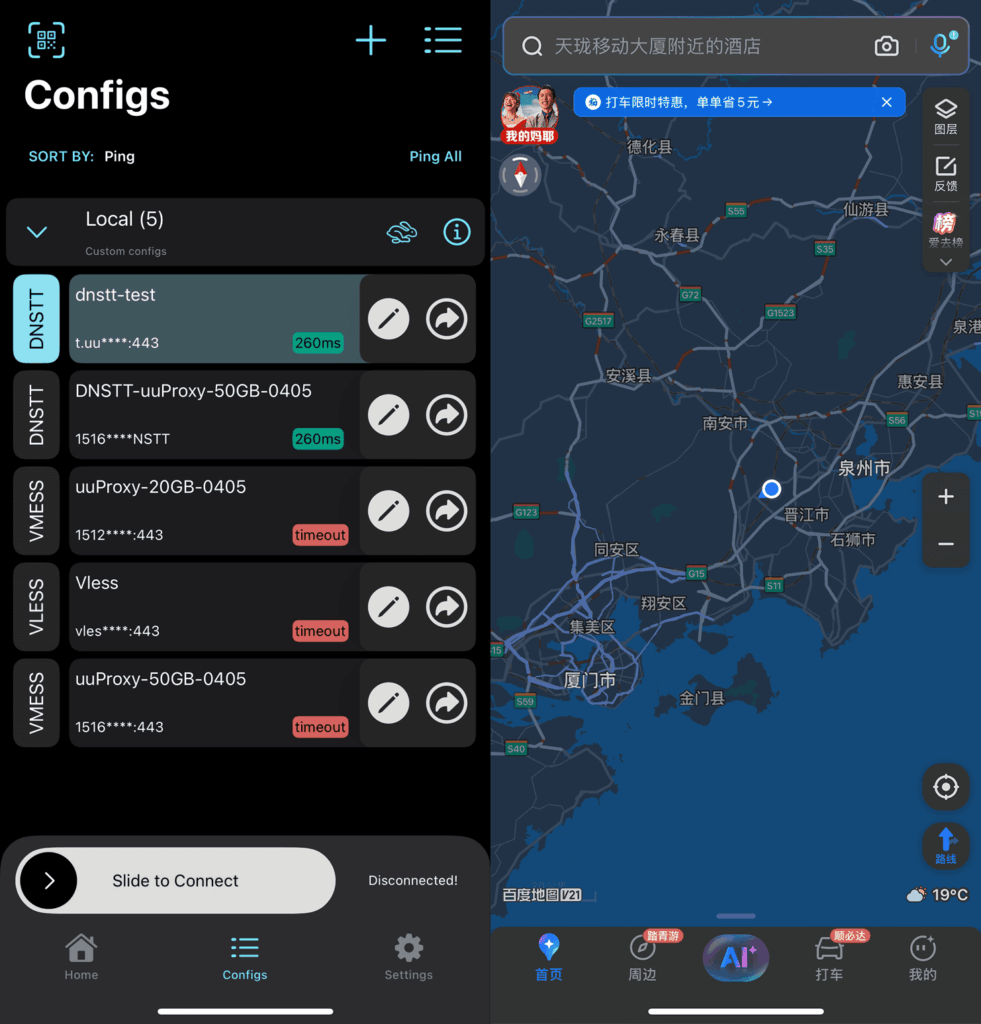
As a result, we deployed implementations of VMess, VLESS, and DNSTT on the same V2Ray server, thereby maximizing server resource utilization and reducing the risk of being blocked.
In addition to V2Ray — which offers high security but relatively slower access speeds — we added the WireGuard protocol. WireGuard is an encrypted protocol similar to OpenVPN but faster than OpenVPN. We also included SOCKS5, an unencrypted proxy protocol that offers the fastest speed among all options. We therefore decided to deploy WireGuard and SOCKS5 on the same server to meet different needs. However, we observed that WireGuard and SOCKS5 often fail to access the international internet in countries with strict network censorship. AmneziaWG, on the other hand, can bypass such restrictions by obfuscating junk packets and disguising traffic to evade censorship.
Accordingly, we added AmneziaWG protocol support to the WireGuard server. Users can switch to SOCKS5 mode for the fastest speed, use WireGuard mode for encrypted communication, or activate AmneziaWG mode to access the international internet from within censored regions. The prerequisite, however, is that WireGuard or SOCKS5 must not be used from the outset in a way that leads to the server being blocked.
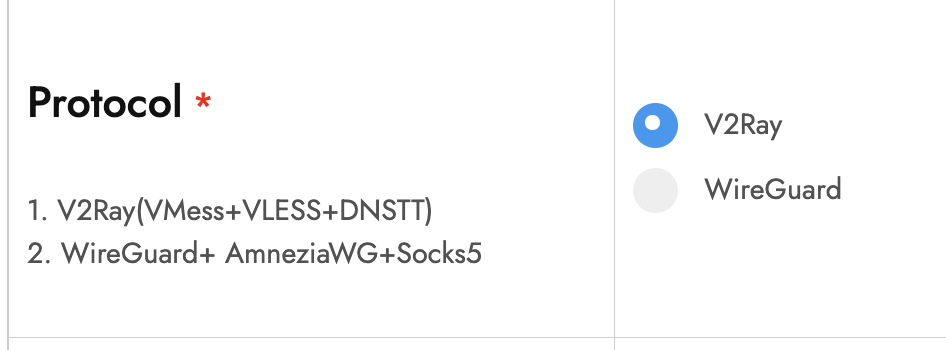
Finally, we categorize the deployed protocols into two major groups:
- V2Ray family: VMess + VLESS + DNSTT
- WireGuard family: WireGuard + AmneziaWG + SOCKS5